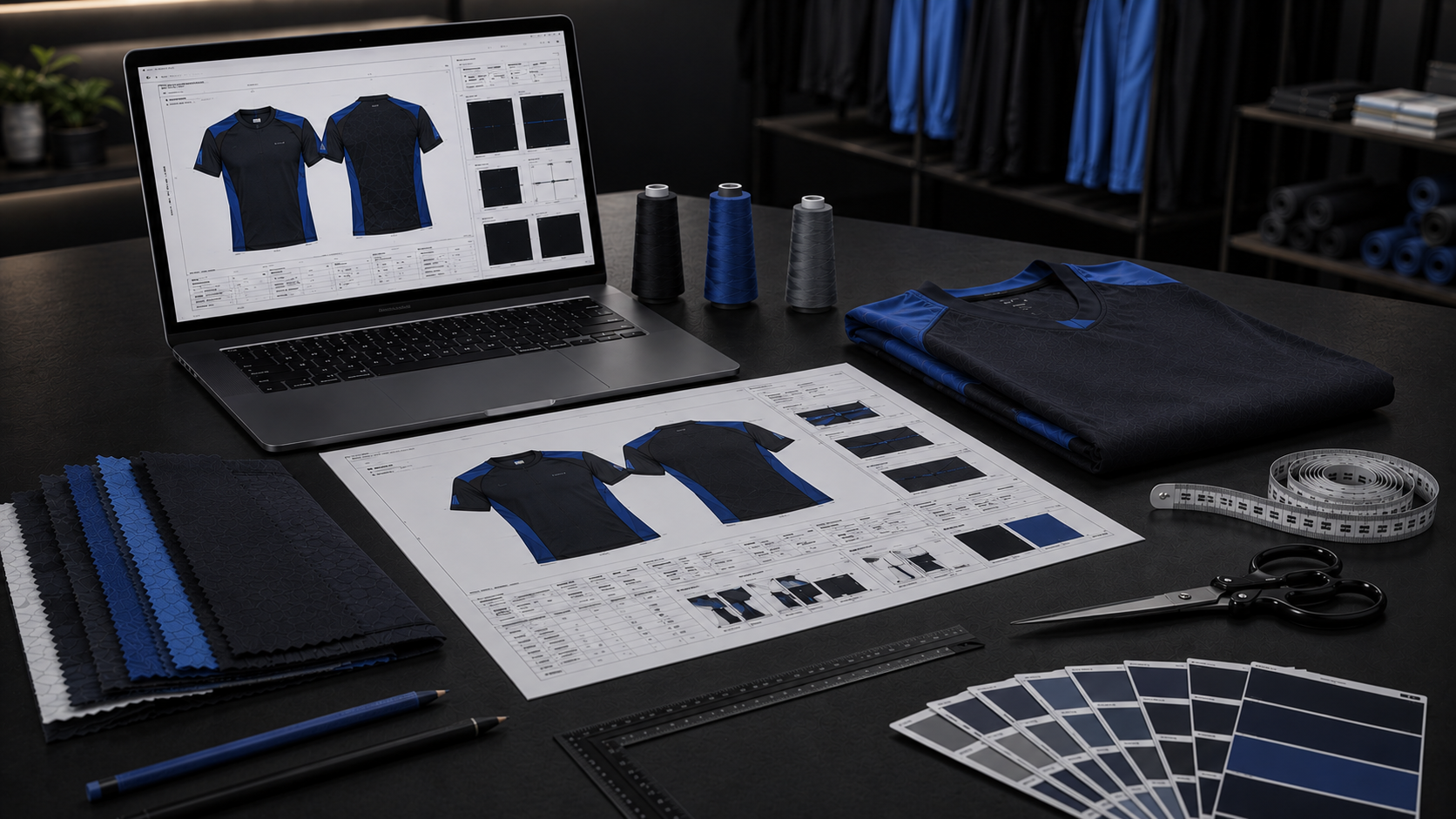
Ask any experienced sourcing manager what separates a smooth first production order from a frustrating one, and a surprising number will point to the same document: the tech pack. It's not glamorous, and new founders often try to skip or shortcut it, but a complete tech pack is the single biggest factor in whether your first sample comes back close to what you had in mind, or whether you spend three rounds of revisions getting there.
Here's what a tech pack actually is, why manufacturers rely on it so heavily, and exactly what to include so it does its job properly. Whether you're commissioning a fully custom OEM design or working with a manufacturer's ODM development team on an existing base pattern, the same underlying principle applies: the more clearly and completely your intent is documented, the closer your first sample will land to what you actually pictured, and the fewer costly revision rounds it will take to get there.
A tech pack (technical package) is a document — usually a multi-page PDF or spreadsheet — that translates a design idea into the specific, measurable information a factory needs to actually cut and sew a garment: flat sketches, exact measurements for every size, fabric and trim specifications, construction notes, and artwork placement for any prints, embroidery or labels. Think of it as the bridge between "here's what I want it to look like" and "here's exactly how to build it."
It's distinct from a mood board or a reference photo, both of which communicate a general aesthetic direction but leave the specific, buildable details entirely open to interpretation. A tech pack removes that ambiguity, which is exactly why manufacturers rely on it so heavily for anything beyond the simplest, most standard product.
Without a tech pack, a factory is working from guesswork or verbal description, filling in gaps with their own assumptions about measurements, fabric weight, and construction details you may have had a very specific idea about. This is how a sample comes back "close but not quite right" — not because the factory did poor work, but because they had to fill in details that were never specified. A tech pack removes that guesswork, and gives both sides a shared, unambiguous reference point to measure the finished sample against.
It also protects you later. If a dispute arises about whether a finished batch matches what was ordered, a detailed tech pack is the objective standard both sides agreed to — far more useful than trying to recall a verbal conversation or a rough sketch shared over email weeks earlier.
You don't need professional design software to build a usable tech pack. A clear spreadsheet with measurements, labelled reference photos, and written construction notes is often enough for a first sample, especially working with an ODM manufacturer who can help fill in technical gaps.
A genuinely usable tech pack combines several distinct types of information, each answering a different question a factory needs answered before they can begin work. Missing any single component tends to create a specific, predictable gap in the resulting sample — missing artwork placement measurements, for instance, almost always means the factory places a logo based on their own judgment rather than yours.
The measurement spec sheet is arguably the single most important page in a tech pack, since it's the direct reference a pattern maker uses to grade your size range. It should list every key measurement point relevant to the garment — for a legging, this typically includes waist, hip, inseam, rise, and leg opening, measured at every size in your planned range, not just a single sample size. Providing a single measurement for one size and asking the factory to "grade proportionally" leaves too much open to interpretation and is one of the more common sources of sizing inconsistency in a first bulk order.
If you're not confident building this from scratch, most manufacturers offering ODM services can help populate a measurement spec sheet based on an existing base pattern, adjusted to your specific brief — a practical middle ground between building one entirely yourself and having no technical input at all.
A tech pack isn't paperwork for its own sake — it's the difference between describing a garment and being able to actually build one.Elevatex Editorial Team
The bill of materials lists every physical component that goes into the finished garment: main fabric (with composition and GSM), any secondary fabrics like mesh panels, elastic or drawcord, zippers or other hardware, labels, and hang tags. Being specific here — not just "polyester-spandex" but the exact ratio and GSM you're targeting — gives the factory a clear standard to source against, and gives you a clear reference to check the delivered fabric against once samples arrive.
Construction notes cover the details that affect how a garment performs and holds up over time: seam type (flatlock for chafe-free activewear seams, for example), stitch density, elastic tension in a waistband, and any reinforcement needed at stress points like crotch seams or shoulder seams. These details rarely show up in a flat sketch or a photo reference, which is exactly why they need to be written out explicitly — a factory can't guess your preference for a flatlock seam over a standard overlock seam just from looking at a picture of the finished look you're going for.
Without a complete tech pack, a factory has two options: make reasonable assumptions and hope they align with your expectations, or come back with a long list of clarifying questions before they can even begin — both of which slow down your timeline. The most common downstream result is a first sample that requires more revision rounds than necessary, simply because ambiguous or missing information had to be filled in somewhere along the way, and wasn't filled in the way you'd have specified if asked directly.
A tech pack is rarely finalized in a single draft. It typically goes through revisions as a first sample reveals fit adjustments, fabric swaps, or construction changes needed before bulk production. The mistake many first-time founders make is managing these revisions informally — a few notes in a chat message, an updated measurement mentioned verbally on a call — rather than updating the actual tech pack document itself and clearly dating or numbering each version.
A simple version control habit — dating each revision, keeping a short changelog of what changed and why, and confirming each new version explicitly with the manufacturer before it becomes the working reference — prevents a common and entirely avoidable problem: a factory working from an outdated version of the spec because the latest change was only ever communicated informally. This becomes especially important once you're managing multiple styles or working with more than one manufacturer, where the risk of an outdated file being used somewhere in the process increases significantly.
If you're building your first tech pack without a background in technical design, start simple: clear reference photos or sketches from multiple angles, a spreadsheet with measurements at each key point across your size range, a written list of fabric and trim specifications, and clear notes on anything non-standard about construction. This doesn't need to be a polished, professional document to be useful — it needs to be complete and unambiguous. Many manufacturers, including those offering private label and ODM services, can help refine a working draft into a production-ready tech pack as part of the sampling process, which is often the most practical starting point for a first-time founder.
Elevatex International helps brands of every size — from first-time founders to established teamwear programs — go from a design brief to a finished, quality-checked product. Tell us what you're building.
Talk to Our TeamNo. A clear spreadsheet with measurements at each size, labelled reference photos or sketches, and written construction notes is often sufficient for a first sample, particularly when working with a manufacturer offering ODM development support.
A mood board communicates a general aesthetic direction using reference images. A tech pack provides the specific, measurable information — exact measurements, materials, construction details — a factory needs to actually cut and sew the garment.
Many manufacturers, particularly those offering ODM services, can help develop a tech pack based on an existing base pattern adjusted to your brief, which is a practical option if you don't have in-house technical design experience.
The factory will either make assumptions to fill the gaps, which can lead to a sample that doesn't match your expectations, or come back with clarifying questions before starting, both of which typically slow down your production timeline.
It should include every key measurement point relevant to the garment, specified at every size in your planned range, not just a single sample size, to give the pattern maker an accurate basis for grading your full size run.

One continuous walkthrough of the entire sportswear manufacturing process — from a locked tech pack to a container leaving the port — and where delays usually creep in.
Read Article
Everything a first-time founder needs to think through before placing a single production order — niche, product range, budget, and the manufacturing decisions that make or break year one.
Read Article
OEM and ODM both put your label on the garment, but the similarities stop there. Here's the practical difference, and how to decide which route fits your team and timeline.
Read Article